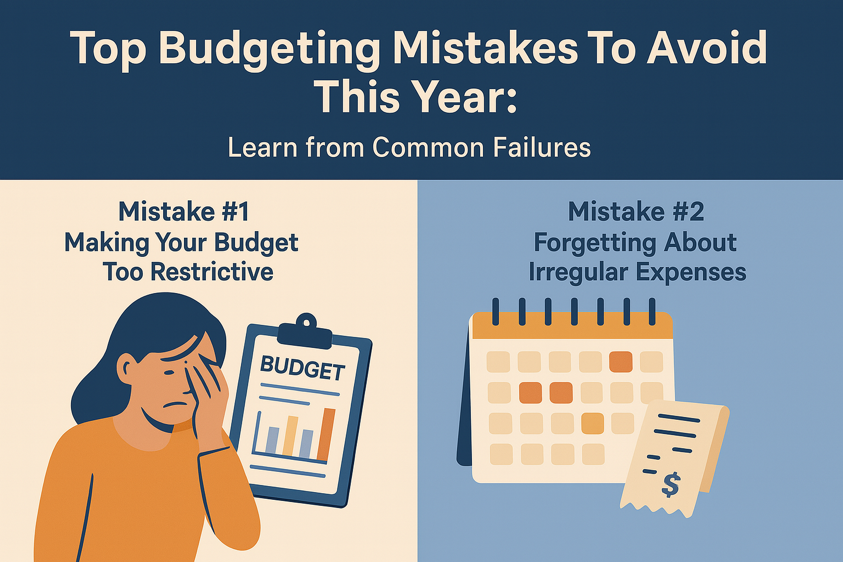
Top Budgeting Mistakes to Avoid: Learn from Common Failures
Top Budgeting Mistakes to Avoid: Learn from Common Failures
Starting fresh, new budget, right? If you’re like most people, you’ve probably started several budgets over the years, only to abandon them within a few months (or weeks). The problem isn’t that budgeting doesn’t work—it’s that most people make the same preventable mistakes that doom their financial plans from the start.
After analyzing thousands of failed budget attempts and successful financial transformations, we’ve identified the most common budgeting mistakes that keep people stuck in financial stress. More importantly, we’ll show you exactly how to avoid them and create a budget that actually sticks.
The Reality of Budget Failure
Before diving into specific mistakes, let’s acknowledge the uncomfortable truth: most budgets fail. Studies show that:
- 80% of budgets are abandoned within the first 3 months
- 65% of people have never successfully stuck to a budget for a full year
- Only 32% of Americans use a formal budget or spending plan
- Average person tries to budget 5 times before finding a system that works
But here’s the encouraging news: the people who succeed aren’t necessarily smarter or more disciplined—they just avoid the common pitfalls that trap everyone else.
Mistake #1: Making Your Budget Too Restrictive
The Problem
The biggest budget killer is trying to cut expenses too drastically, too quickly. People get excited about financial change and create unrealistic budgets that eliminate all fun, drastically reduce grocery spending, or set impossible savings targets.
What This Looks Like:
- Cutting your dining budget from $400 to $50 overnight
- Eliminating all entertainment expenses
- Planning to save 50% of your income when you’ve never saved 5%
- Allocating $100 for groceries when you typically spend $300
Why It Fails:
Overly restrictive budgets create a “diet mentality” that leads to budget binges. Just like crash diets, extreme budget restrictions are unsustainable and often lead to overspending rebounds that leave you worse off than before.
The Solution:
Start with a 10% reduction approach. If you spend $400 on dining out, aim for $360 first. Once that becomes natural, reduce to $320. Small, sustainable changes compound over time and become permanent habits.
The 80/20 Rule: Allocate 80% of your budget to needs and reasonable wants, 20% to savings and goals. This leaves room for life while still making progress.
Mistake #2: Forgetting About Irregular Expenses
The Problem
Most people budget for regular monthly expenses but completely forget about irregular costs that occur throughout the year. When these expenses hit, they blow up the budget and create financial stress.
Commonly Forgotten Expenses:
- Car registration and inspections
- Holiday and birthday gifts
- Quarterly insurance payments
- Annual subscriptions (Amazon Prime, software)
- Home maintenance and repairs
- Medical co-pays and deductibles
- Travel and vacation costs
- Back-to-school expenses
- Property taxes
Why It Fails:
When irregular expenses aren’t planned for, people either go into debt to cover them or rob money from other budget categories, creating a domino effect that derails the entire budget.
The Solution:
Create an “irregular expenses” fund. List all non-monthly expenses you had last year, add 10% for inflation and unexpected costs, then divide by 12. Save this amount monthly.
Example:
- Car registration: $120
- Gifts: $600
- Vacation: $2,400
- Home repairs: $800
- Medical expenses: $400
- Total: $4,320 ÷ 12 = $360/month
Set up an automatic transfer of $360 monthly to a separate savings account for these expenses.
Mistake #3: Not Tracking Actual Spending
The Problem
Many people create beautiful budgets but never track whether they’re actually following them. They assume they’re doing well until they check their bank account and discover they’ve overspent by hundreds of dollars.
What This Looks Like:
- Creating a detailed budget but never updating it
- Estimating expenses instead of tracking real numbers
- Only checking spending at month-end (too late to adjust)
- Assuming small purchases don’t matter
Why It Fails:
A budget without tracking is just wishful thinking. Without real data, you can’t identify problem areas, celebrate successes, or make necessary adjustments.
The Solution:
Choose one tracking method and stick to it:
Daily tracker: Log expenses as they happen (best for overspenders) Weekly tracker: Update spending every Sunday (good balance) Transaction review: Check bank accounts twice weekly
Use the “receipt jar” method: Put all receipts in a jar and enter them once weekly. This physical reminder helps build the habit.
Mistake #4: Using Someone Else’s Budget Categories
The Problem
People often copy budget templates or follow generic advice without considering their unique situation. This leads to budgets that don’t reflect their actual life and values.
Generic Categories That Don’t Work for Everyone:
- “Entertainment” (too vague—movies vs. hobbies vs. concerts)
- Fixed percentages (50/30/20 doesn’t work for high rent areas)
- Assuming everyone has the same priorities
- Not accounting for cultural or family obligations
Why It Fails:
When budget categories don’t match your real spending patterns and values, you’ll constantly struggle to make transactions fit, leading to frustration and abandonment.
The Solution:
Create categories based on YOUR actual spending:
- Review 3 months of bank statements
- Identify where money actually goes
- Create categories that match your patterns
- Include subcategories for clarity
Example: Instead of “Entertainment”
- Streaming services: $25
- Movies/concerts: $50
- Hobbies: $75
- Social activities: $100
Mistake #5: Setting Unrealistic Savings Goals
The Problem
Inspired by financial gurus or success stories, people set savings goals that are completely unrealistic for their current situation. When they can’t meet these goals, they feel like failures and give up entirely.
Unrealistic Goal Examples:
- Saving $10,000 when you’ve never saved $1,000
- Planning to save 50% of income immediately
- Setting the same savings rate as someone earning twice your income
- Trying to pay off all debt in 6 months when it took years to accumulate
Why It Fails:
Impossible goals create a cycle of failure and discouragement. People often think “if I can’t save $500/month, why bother saving anything?”
The Solution:
Start with the minimum viable savings:
Week 1-4: Save $25/week ($100/month) Month 2-3: Increase to $50/week ($200/month) Month 4-6: Increase to $75/week ($300/month)
The “1% rule”: Start by saving 1% of your income, then increase by 1% every few months. This gradual approach builds the savings muscle without shock.
Mistake #6: Not Planning for Fun
The Problem
Many budgets eliminate all discretionary spending in an effort to maximize savings. This creates a feeling of deprivation that ultimately leads to rebellious overspending.
What This Looks Like:
- Zero budget for entertainment
- No allowance for impulse purchases
- Eliminating all hobbies
- Never budgeting for social activities
Why It Fails:
Humans need enjoyment and social connection. Budgets that ignore this psychological reality are doomed to fail when people inevitably spend on these needs.
The Solution:
Build in “fun money” from day one:
- Individual fun budgets: Each person gets guilt-free spending money
- Couple fun budget: Money for shared activities
- Impulse fund: Small amount for unexpected wants
- Experience fund: Larger amounts for special activities
Minimum recommendation: 5% of take-home income for personal enjoyment, even when money is tight.
Mistake #7: Perfectionism and All-or-Nothing Thinking
The Problem
People think that one budget mistake means total failure. They overspend in one category and assume the entire budget is ruined, leading them to abandon it completely.
All-or-Nothing Examples:
- “I overspent on groceries, so my budget is blown”
- “I forgot to track for 3 days, so I’ll start over next month”
- “I had an unexpected expense, so budgeting doesn’t work”
- “I can’t stick to it perfectly, so why try?”
Why It Fails:
Perfectionism prevents learning and adaptation. Real budgeting success comes from consistent effort and gradual improvement, not perfect execution.
The Solution:
Adopt the “progress over perfection” mindset:
- 80% adherence is more valuable than 100% for one month followed by quitting
- Learn from overspending instead of being defeated by it
- Adjust categories based on real-world experience
- Celebrate small wins and consistent effort
The “reset rule”: If you mess up, you have 24 hours to get back on track. No waiting until next month or next year.
Mistake #8: Ignoring Your Partner’s Input
The Problem
In relationships, one person often creates and manages the budget without involving their partner. This leads to resentment, secret spending, and budget sabotage.
What This Looks Like:
- One person setting all the budget rules
- Not discussing financial priorities together
- Hiding purchases from each other
- Different people having different financial goals
Why It Fails:
A budget only works when everyone affected by it is on board. Financial teamwork is essential for long-term success.
The Solution:
Create a “budget partnership”:
- Hold monthly money meetings to discuss progress and challenges
- Set joint goals that excite both partners
- Assign responsibility based on strengths and preferences
- Give each person discretionary money with no questions asked
- Make major financial decisions together
Mistake #9: Not Automating What You Can
The Problem
Relying entirely on willpower and memory for budget success. People manually transfer money to savings, manually pay bills, and manually track every expense, creating unnecessary friction.
What Should Be Automated:
- Savings transfers
- Bill payments
- Investment contributions
- Emergency fund building
Why Manual Systems Fail:
Humans are forgetful and emotional. When systems rely on remembering to save or pay bills, important financial tasks get skipped during busy or stressful periods.
The Solution:
Automate your financial foundations:
- Automatic savings: Transfer money to savings the day you get paid
- Bill pay automation: Set up automatic payments for fixed bills
- Investment automation: Regular transfers to retirement and investment accounts
- Emergency fund automation: Small weekly transfers to build your safety net
The “pay yourself first” automation: Set up savings transfers to happen immediately when your paycheck hits, before you have a chance to spend it.
Mistake #10: Giving Up Too Quickly
The Problem
Most people expect immediate results and give up when budgeting feels difficult or when they don’t see dramatic changes in the first month.
Unrealistic Expectations:
- Expecting to love budgeting immediately
- Wanting to see major progress in 30 days
- Thinking it should be easy if it’s “right”
- Comparing their beginning to others’ middle
Why Quick Quitting Happens:
Budgeting is a skill that takes time to develop. Like learning to drive or cook, it feels awkward and difficult at first but becomes natural with practice.
The Solution:
Commit to a 90-day trial:
- Month 1: Focus only on tracking expenses (don’t worry about perfection)
- Month 2: Add one improvement (like automating savings)
- Month 3: Refine categories and amounts based on real data
Success metrics that matter more than perfection:
- Tracking consistently (even if amounts are wrong)
- Having fewer financial surprises
- Feeling more aware of spending patterns
- Making small improvements each month
Creating a Failure-Proof Budget
Based on avoiding these common mistakes, here’s how to create a budget that actually works:
Step 1: Start with Reality
- Track current spending for 2 weeks before creating a budget
- Use real numbers, not ideal numbers
- Include irregular expenses from the beginning
- Plan for fun and flexibility
Step 2: Make Gradual Changes
- Reduce spending categories by 10-15% maximum
- Increase savings slowly over time
- Change one habit at a time
- Allow for adjustment period
Step 3: Build in Flexibility
- Include “miscellaneous” category for unknowns
- Plan for budget adjustments
- Allow individual discretionary spending
- Create systems for handling overspending
Step 4: Automate Success
- Automate savings and investments
- Set up bill pay for fixed expenses
- Use apps or tools for tracking
- Create reminders for budget reviews
Step 5: Plan for Challenges
- Discuss with family members
- Prepare for irregular expenses
- Have a plan for overspending months
- Set up accountability systems
Warning Signs Your Budget Is About to Fail
Watch for these red flags:
Behavioral Warning Signs:
- Avoiding budget tracking for multiple days
- Feeling deprived and resentful
- Making “exceptions” every week
- Hiding purchases from yourself or others
System Warning Signs:
- Budget categories consistently over by 20%+
- Never having money left for fun or flexibility
- Constantly moving money between categories
- Feeling stressed rather than empowered by budgeting
Quick Fixes:
- Increase problematic budget categories by 15%
- Add a “buffer” category for unknowns
- Reduce savings goals temporarily
- Seek support from others or professionals
Success Stories: Learning from Recovery
Case Study 1: The Perfectionist
Problem: Sarah quit budgeting every time she overspent by even $5. Solution: She adopted the “80% rule”—as long as she was within 80% of her targets, she considered it a success. Result: First successful year of budgeting, saved $8,000.
Case Study 2: The Restrictor
Problem: Mike eliminated all entertainment and dining out, then binged on both. Solution: He allocated $200/month for fun and learned to enjoy budgeted treats guilt-free. Result: Consistent budgeting for 18 months, paid off $15,000 in debt.
Case Study 3: The Forgetter
Problem: Lisa constantly had unexpected expenses that derailed her budget. Solution: She created an “irregular expenses” fund with $300/month. Result: No budget emergencies in 2 years, built substantial savings.
Your Budget Recovery Plan
If you’ve failed at budgeting before, here’s your comeback strategy:
Week 1: Assessment
- Identify which mistakes you made previously
- Track spending for one week without judgment
- List your true financial priorities
Week 2: Simple Start
- Create a basic budget with just 5-7 categories
- Include fun money and buffer categories
- Set up one automation (savings transfer)
Week 3: Tracking Practice
- Focus only on expense tracking
- Don’t worry about staying within limits yet
- Adjust categories based on real spending
Week 4: First Optimization
- Make one small improvement
- Celebrate any progress made
- Plan for month 2 adjustments
Tools and Resources for Success
Recommended Budgeting Tools:
- YNAB: Excellent for zero-based budgeting
- Mint: Free with automatic transaction import
- EveryDollar: Simple percentage-based budgeting
- Spreadsheets: Maximum customization
Support Systems:
- Budgeting communities: Online forums and local groups
- Accountability partners: Family or friends with similar goals
- Professional help: Financial coaches for complex situations
Our Free Resources:
Download our collection of beginner-friendly budget templates designed to avoid common mistakes:
- Anti-Failure Budget Template: Includes buffer categories and realistic targets
- Irregular Expense Planner: Calculate and save for annual costs
- Budget Recovery Worksheet: Assess past failures and plan improvements
Get Your Free Budget Templates →
The Bottom Line
Budgeting failures are usually system failures, not personal failures. By avoiding these common mistakes and building flexibility into your financial plan, you can create a budget that actually improves your life instead of making it more stressful.
Remember:
- Progress beats perfection every time
- Small changes compound into big results
- Flexibility prevents abandonment
- Automation reduces reliance on willpower
- Patience allows skills to develop
The goal isn’t to create the perfect budget—it’s to build a financial system that helps you achieve your goals while still enjoying your life. Start simple, be patient with yourself, and focus on building sustainable habits rather than dramatic overnight changes.
Your financial future depends not on perfection, but on persistence. And persistence becomes much easier when you avoid the mistakes that trip up most people.
Ready to create a budget that actually works? Start with our free anti-failure budget templates or get personalized guidance with our premium budget coaching system.
Ready to Transform Your Finances?
Browse our collection of free budget templates and start taking control of your money today.
Browse Free Templates